
- Up to 600%
- 15-min payouts
- Licensed
558H games — five formats, five completely different bills
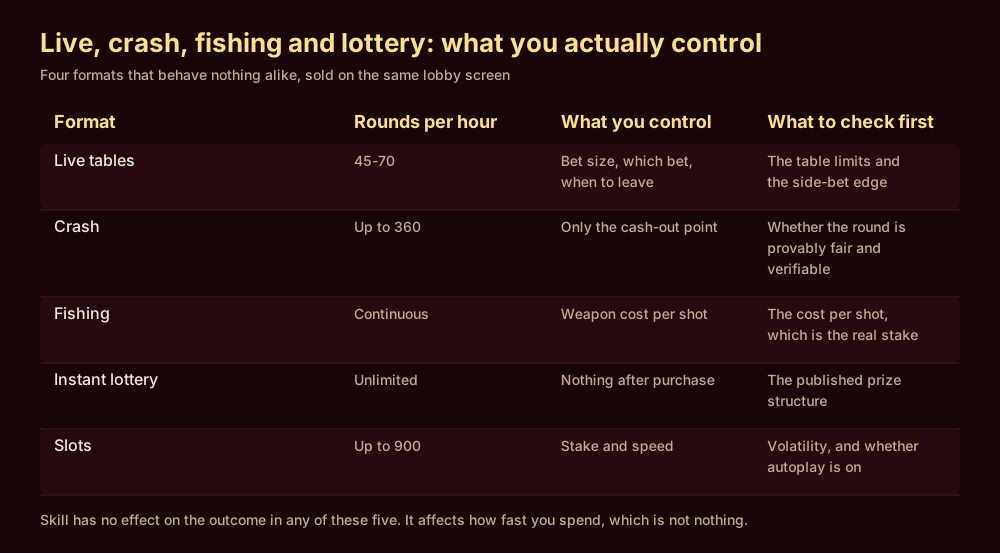
A casino lobby presents live tables, crash games, fishing games, instant lotteries and slots as five tiles of equal size. In terms of what they cost you per hour and how much of the outcome you influence, they are not remotely comparable. This guide sorts them by the two numbers that matter.
Rounds per hour, and why it decides everything
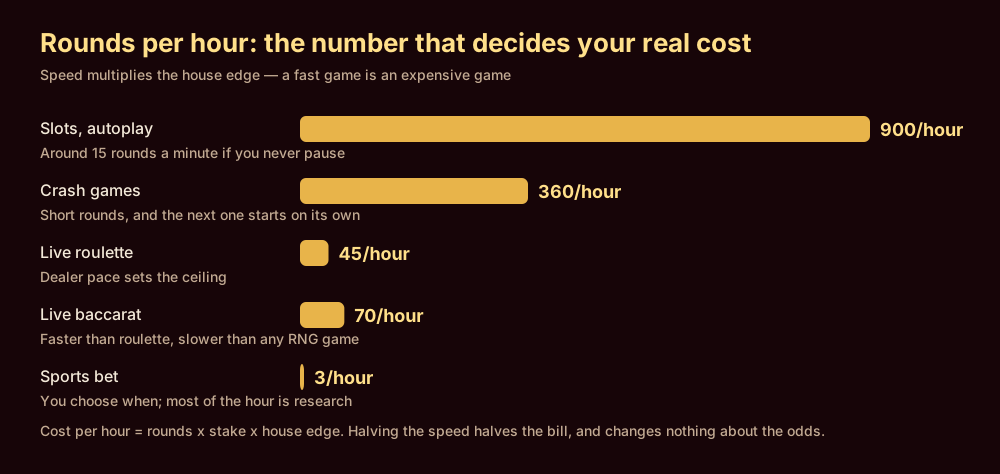
Take a ৳20 stake and a 4% house edge. On a live roulette table at 45 spins an hour, the expected cost is ৳36 an hour. In a crash game at 360 rounds an hour, it is ৳288. The odds are the same. The bill is eight times larger, and the entertainment is arguably thinner.
This is the whole reason the industry builds fast formats. Nothing needs to be unfair for a fast game to be more profitable than a slow one.
Live dealer tables
Real dealers, real cards or wheels, streamed. The pace is set by a person, which caps it at roughly 45 to 70 rounds an hour and makes live tables the slowest thing in the lobby after sports betting.
What to check before you sit down: the table limits, because a live table with a ৳500 minimum will chew a small bankroll regardless of the odds; and the side bets, which almost always carry a much higher house edge than the main bet. A baccarat main bet is one of the better-priced wagers in any casino. The pair side bet next to it is one of the worst, and they are separated by two centimetres of screen.
The tie bet in baccarat and the "any craps" style side bets are the clearest examples of a good game with an expensive option attached. The main bet is not the trap; the button beside it is.
Crash games
A multiplier climbs from 1.00x and stops at a point decided when the round is generated. You cash out before it stops, or you lose the stake. The appeal is obvious: you appear to control the exit.
What you control is the cash-out point, and nothing else. The crash point was fixed before you clicked anything. Choosing 1.5x gives you frequent small wins and occasional losses; choosing 10x gives you rare large wins and long losing runs. The expected return is the same either way, and the house edge is applied identically.
- 1Check whether the game is provably fair, meaning each round publishes a hash you can verify after the fact. Most reputable crash games do; verify it rather than assume it.
- 2Check the round length. Under ten seconds means over 360 rounds an hour, which is the most expensive speed in any lobby.
- 3Decide the cash-out multiplier before the round starts, and set auto cash-out. The entire loss pattern of these games comes from hesitating for half a second.
- 4Ignore the live feed of other players' wins. It is a display of the winners only, and it is there for exactly the reason you think.
Fishing games and instant lotteries
Fishing games look like arcade shooters and are usually sold as skill-based. The skill is real in one narrow sense — aim affects which target you hit — and irrelevant in the sense that matters, because each weapon has a cost per shot and each target has a fixed payout weighting. Your real stake is the cost per shot multiplied by how fast you fire, and both are easy to lose track of when the screen is full of movement.
Instant lotteries and scratch formats are the simplest thing in the building: you pay, an outcome is revealed, nothing you do after purchase affects it. The only thing worth checking is whether the prize structure is published. If it is not, you are buying a ticket with unpublished odds.
| Format | The real stake | The number nobody reads |
|---|---|---|
| Fishing | Cost per shot, multiplied by shots per minute | Weapon upgrade cost — a stronger weapon multiplies your stake, not your edge |
| Instant lottery | Ticket price | Published prize structure and remaining top prizes |
| Crash | Stake per round | Rounds per hour |
| Live table | Stake per hand, plus any side bets | Side bet house edge |
Frequently asked questions
Which casino game has the best odds?
Among common formats, the baccarat banker bet and even-money roulette bets on a single-zero wheel carry the lowest house edge. Side bets and instant-win formats sit at the expensive end. None of them has a positive expected return.
Are crash games rigged?
A provably fair crash game publishes a cryptographic hash before each round that you can verify afterwards, which makes manipulation detectable. Whether a specific game does this is something to check in the game itself rather than assume from the category.
Do fishing games involve skill?
Aim affects which target you hit, so in a narrow sense yes. It does not change the expected return, because payouts are weighted per target. The cost per shot is the number that decides what an hour costs you.
Which format is cheapest per hour?
Sports betting, by a wide margin, because you place a handful of bets rather than hundreds of rounds. Among casino games, live tables are the slowest and therefore the cheapest per hour at the same stake.
How many games does 558H offer?
The lobby is organised into slots, live tables, crash, fishing and lottery sections. The exact game count and supplier list change frequently, so the operator's own lobby is the only current source — any number quoted on an affiliate site is out of date by the time you read it.